Unit I
IN THIS LESSON
If our senses can deceive us and our reasoning can outrun experience, which should we trust as the true foundation of knowledge: reason alone, or the evidence of the world?
Topics discussed:
How radical skepticism (including modern versions like simulations) motivates Descartes’ turn inward
A reconstruction of René Descartes’ Cogito argument as a proposed foundation of certainty
The difficulty of moving from Descartes’ foundational truths to knowledge of the external world
Philosophical objections to Descartes’ inference from thinking occurs to a unified self exists, including Nagasena’s chariot analogy
The role of innate ideas and God in Descartes’ attempt to bridge the epistemic gap
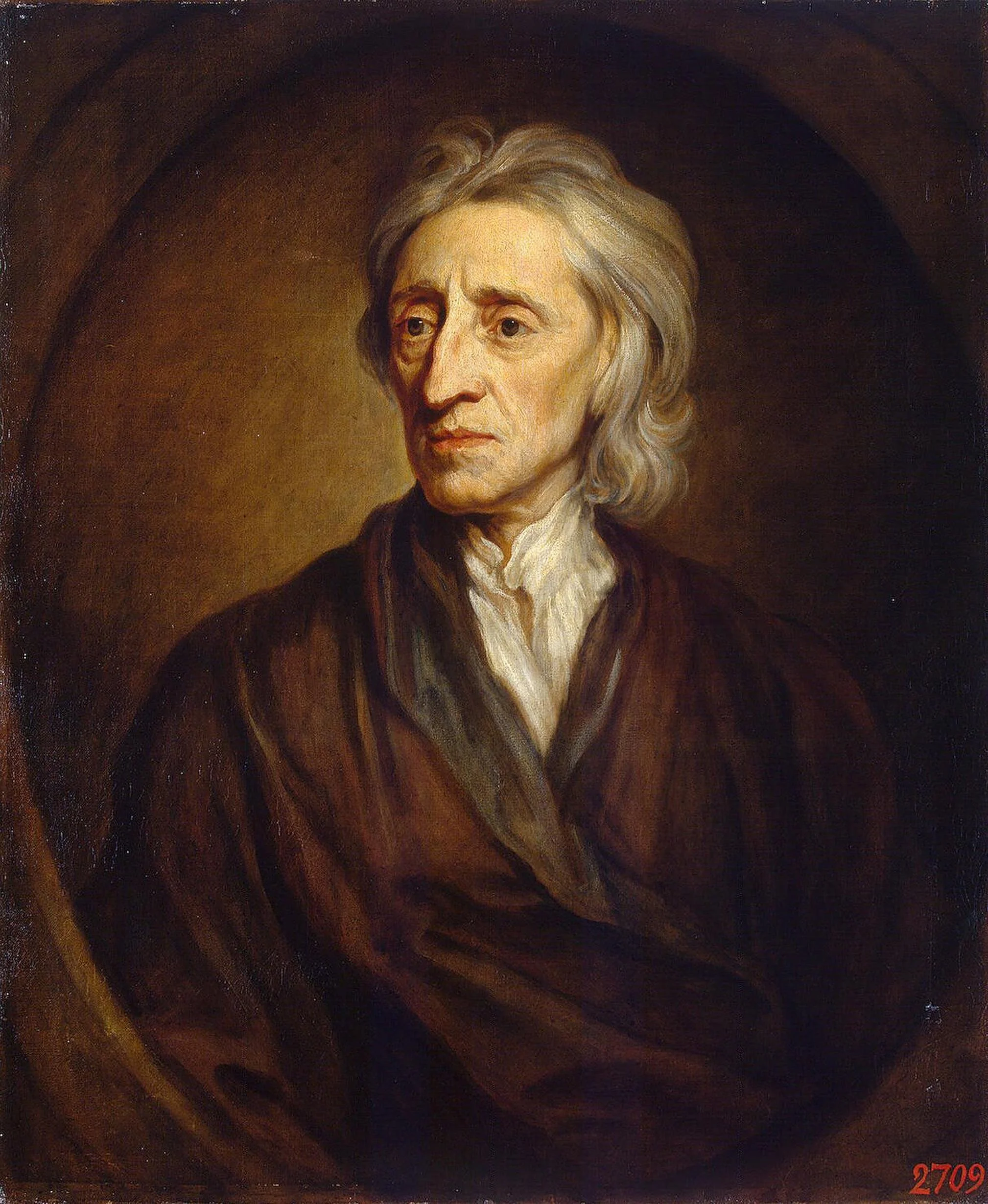
John Locke’s rejection of innate ideas and the blank slate hypothesis
Locke’s empiricism, including simple vs. complex ideas and indirect realism
The tension between reason and the senses as competing sources of knowledge
The emerging dilemma between rationalism and empiricism as rival epistemic frameworks

Focus Questions
How is the Simulation argument like a modern-day evil demon argument?
How does the Cogito argument respond to radical skepticism, and what exactly does it succeed in proving?
Does the fact that thinking occurs require the existence of a unified, substantial self — or only thoughts? Explain, as best you can, the challenge from Nagasena’s chariot analogy.
Why does Descartes think God is needed to secure knowledge beyond the Cogito, and why has this move been controversial?
What is Locke’s argument against innate ideas, and how does it undermine key assumptions in rationalism?
What are simple and complex ideas?
How does Locke’s empiricism lead to a more modest view of what we can know with certainty?
In what sense does empiricism trade certainty for reliability, and is this a reasonable exchange?
Both Descartes and Locke were each interested in providing a counterbalance to religious fanaticism, albeit they took different approaches and had different aims: Descartes attempted to reconcile faith and reason, and Locke tried to convince his readers that we can’t view 100% about our views on reality. How did each try accomplish their goals?

Glossary
Simulation Argument and Posthumanism
The Simulation Argument: The theory proposing that one of three possibilities must be true: intelligent civilizations go extinct before reaching technological maturity, they reach maturity but choose not to run simulations, or they reach maturity and run many simulations (meaning we are likely in one).
Posthuman Stage: The stage of technological maturity required to create ancestor simulations that are sufficiently detailed to include conscious beings.
Ancestor Simulations: Highly detailed, conscious-involving computer simulations run by a technologically mature civilization.
Nick Bostrom: A philosopher known for his work on the Simulation Argument and the limits on Artificial Intelligence (AI).
Cartesian Rationalism and Foundationalism
Rationalism: The philosophical view that knowledge is fundamentally rooted in reason, rather than sensory experience.
The Cogito Argument (Descartes): The assertion that one's own existence is the only thing that can be known with certainty because the very act of doubting one's existence proves that a thinking entity must exist to do the doubting ("I think, therefore I am").
Foundational Beliefs (Descartes): The four truths Descartes arrived at after systematic doubt: the thinker must exist at the moment of thinking, every phenomenon must have a cause, an effect cannot be greater than its cause, and the mind contains innate ideas (perfection, space, time, motion).
Innate Idea: An idea believed to be inborn, or a part of the mind from birth, such as the idea of perfection or God.
Ontological Argument (for God’s existence): An argument for God's existence that relies solely on reason and definition (e.g., Descartes' argument that the innate idea of a perfect God must have been implanted by an actual perfect being, God).
Lockean Empiricism
Empiricism: The philosophical view that all knowledge comes solely through sensory experience; thus, separating knowledge from the subjective condition of the knower is impossible.
The Blank Slate Hypothesis (Tabula Rasa): John Locke's assertion that the human mind is born without any innate ideas, like a blank slate, and is filled with content only through sensory experience and subsequent reflection.
Simple Ideas: Ideas passively received by the mind directly from the external world via the senses; they perfectly represent reality (e.g., flavor, color, feel).
Complex Ideas: Ideas created by the mind actively combining, comparing, or abstracting simple ideas; they are considered less accurate in representing the external world.
Indirect Realism: The belief that all a person ever perceives are their own ideas (in the mind), which are similar to but not the external world itself.
The Problem of the Self
Nāgasena's Challenge: The argument, presented by the Buddhist sage Nāgasena, that thinking may not require a separate, unified "thinker-substance," much like motion does not require a separate "chariot-substance."
Buddhist Tenet of No-Self: The central principle that there is no eternal, stable self or "haver" of thoughts, no essential self tied to personal identity, and no self that originates or causes action.
For other questions…

Reading List
Princess Elisabeth of Bohemia, René Descartes, & Lisa Shapiro (Translator), The Correspondence between Princess Elisabeth of Bohemia and René Descartes.
René Descartes, Meditations on First Philosophy.
John Greco (Ed.), The Oxford Handbook of Skepticism.
Matt Lawrence, Like a Splinter in Your Mind: The Philosophy Behind the Matrix Trilogy.
John Locke, An Essay Concerning Human Understanding.
Phil Washburn, Philosophical Dilemmas: A Pro and Con Introduction to the Major Questions and Philosophers.
Keith Yandell, Philosophy of Religion (2nd Edition).