Unit II
IN THIS LESSON
If God is perfectly good, then this world demands an explanation—or a surrender of belief.
Topics discussed:
The relationship between intellectualism and belief in the supernatural
A Pyrrhonian-style move: examining both sides of the “religion vs. reason” debate
Early Christianity as a countercultural and sometimes anti-intellectual movement
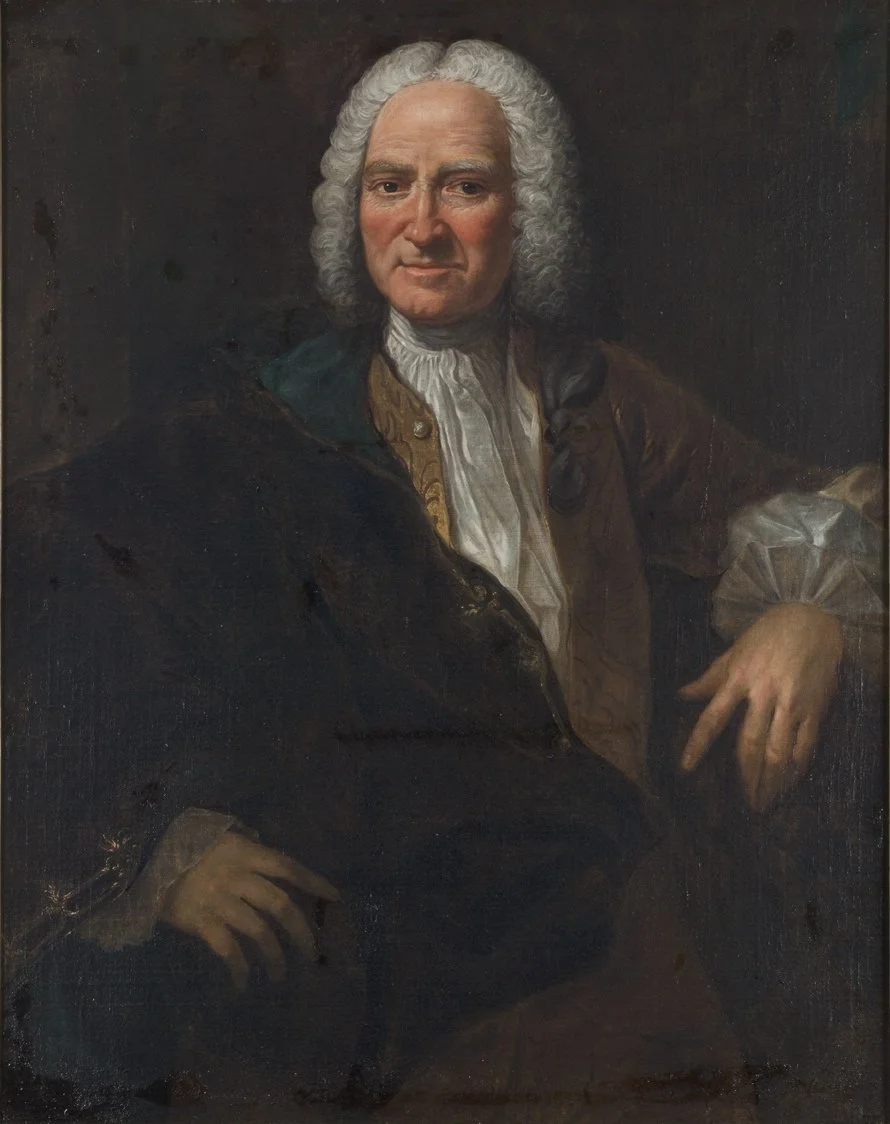
Introduction to Baron d’Holbach—an early, explicit defender of atheism
The notion of the God of the Gaps
The Problem of Evil argument against God’s existence

Focus Questions
What was the intellectual climate of antiquity, and why might it be described as “impressive”?
Why might Christian beliefs have appeared strange or irrational to Greco-Roman thinkers?
Can a person be both highly intellectual and religious, or are these in tension?
Who was d’Holbach, and why is he considered a significant figure in the philosophy of religion?
What is the core of d’Holbach’s critique of non-physical things?
Why does d’Holbach claim that the traits we assign to God, God’s “perfections,” are devoid of all meaning?
What is the notion of the God of the Gaps?
What are the “omni-traits” and how do they generate the problem of evil?

Glossary
Enlightenment & d’Holbach
Atheism – The belief that no gods exist
Materialism – The view that only physical matter exists; no souls or spirits
Determinism – The idea that all events are caused by prior conditions and laws of nature
Encyclopedist – A contributor to the Enlightenment project of systematically organizing human knowledge
Salon – A gathering of intellectuals for discussion, common in Enlightenment France
Intellectual Culture of Antiquity
Antiquity – The ancient world, especially Greek and Roman civilization
Atomism – The theory that everything is composed of indivisible particles (atoms)
Public Intellectual Culture – A society in which ideas, science, and philosophy are openly discussed and valued
Early Christianity & Criticism
Millenarianism – The belief that the end of the world is imminent
Anti-Intellectualism – Distrust or rejection of intellectual inquiry and reasoning
Ascetic Values – Ideals such as humility, poverty, and self-denial
Critics of Religion
Celsus – Argued that Christians were uneducated and too quick to believe
Porphyry – A later critic who launched more systematic philosophical attacks
Comparative Religion Argument – The argument that when many religions share similar core stories or doctrines, this reduces the likelihood that any single one is uniquely true. Instead, these similarities are better explained by common psychological, cultural, or narrative tendencies. For example, recurring ancient stories of dying-and-rising gods may indicate a widespread mythological pattern rather than independent confirmation of a single historical truth—much like the repeated structure of superhero origin stories today reflects shared storytelling conventions rather than real events.
Epistemology & Belief
Dogma – A belief held with unquestioning certainty
Rational Inquiry – The use of reason and evidence to form beliefs
Cognitive Bias – Systematic errors in thinking that affect judgment
Conventional skepticism – The view that we should withhold belief when evidence is insufficient

Further Reading
Roderick Beaton, The Greeks: A Global History.
Michael Frede, A Free Will: Origins of the Notion in Ancient Thought.
Christine Hayes, What's Divine about Divine Law?: Early Perspectives.
Baron d’Holbach, The System of Nature.
Note: This work was originally published under the name of Jean-Baptiste de Mirabaud. Baron d’Holbach’s involvement was not known widely known about until after his death, and it is possible that Denis Diderot assisted him in writing it. Nonetheless, d’Holbach’s partial authorship was an “open secret” among the various French enlighteners, including Voltaire (who detested d’Holbach’s views).
Catherine Nixey, The Darkening Age: The Christian Destruction of the Classical World.
Stephen Prothero, God Is Not One: The Eight Rival Religions That Run the World—and Why Their Differences Matter.
Eberhard W. Sauer, The Archaeology of Religious Hatred in the Roman and Early Medieval World.
Robert Wright, The Evolution of God.