Unit II
IN THIS LESSON
If every event has a cause, then perhaps your next thought was written into the universe long before you were born.
Topics discussed:
The American, French, and Latin American Revolutions as products of the Enlightenment
Moderate vs. Radical Enlightenment thinkers
Three explanations for historical change
How the rise of the social sciences transformed explanations of human behavior
Laplace's Demon and the idea of causal determinism
The distinction between causal determinism and hard determinism
Earlier forms of determinism
The emergence of social physics
Historical and philosophical objections to hard determinism
Scientific challenges from non-Euclidean geometry and quantum mechanics
Why indeterminism does not automatically establish free will
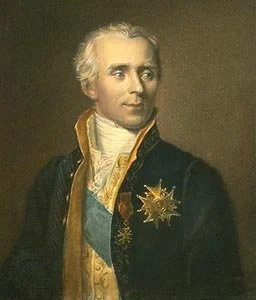

Focus Questions
How did moderate and radical Enlightenment thinkers differ in their political goals?
What is causal determinism?
How does Laplace's Demon illustrate the idea of causal determinism?
How does hard determinism differ from causal determinism? Why did Laplace's formulation represent a new scientific version of determinism?
What is social physics, and why did it challenge traditional ideas about free will?
Why did Leibniz believe that determinism threatened morality and human flourishing?
How did developments in mathematics and quantum mechanics weaken confidence in classical determinism?
Why does rejecting determinism not automatically establish the existence of free will?

Glossary
Historical Background
American Revolution – The movement through which the thirteen American colonies declared independence from Britain, drawing heavily upon Enlightenment ideas about rights and government.
French Revolution – The political and social upheaval beginning in 1789 that overthrew the French monarchy and transformed European politics.
Enlightenment – An intellectual movement emphasizing reason, science, liberty, and the critical examination of political and religious authority.
Moderate Enlightenment – Enlightenment thinkers who generally favored constitutional government, gradual reform, and limited political change while often accepting monarchy and some social hierarchy.
Radical Enlightenment – Enlightenment thinkers who advocated democracy, equality before the law, freedom of thought, separation of church and state, and the rejection of monarchy and inherited privilege.
Explaining Historical Change
Ideas Matter Thesis – The view that philosophical and political ideas can directly shape human behavior and ultimately transform history.
Social Dynamics – The view that large-scale historical events arise primarily from underlying social forces and structural pressures rather than ideas alone.
Elite Overproduction – Peter Turchin's theory that political instability occurs when societies produce more educated or ambitious elites than available positions of power.
Little Things Matter Thesis – The view that countless small cultural and technological changes gradually reshape society and eventually produce major historical transformations.
Empathy Revolution – Lynn Hunt's idea that novels and other forms of literature helped readers understand the experiences of others, contributing to new conceptions of human rights.
Determinism
Causal Determinism – The view that every event is completely determined by prior events together with the laws of nature.
Hard Determinism – The philosophical position that, because causal determinism is true, genuine human free will does not exist.
Laplace's Demon – Laplace's thought experiment describing an intelligence that, knowing the complete state of the universe and all the laws of nature, could predict every future event and reconstruct every past event with perfect accuracy.
Retrodiction – Inferring past events from complete knowledge of the present state of the universe.
Prediction – Determining future events from present conditions and the laws of nature.
Earlier Forms of Determinism
Stoic Fatalism – The Stoic view that everything unfolds according to the rational order (Logos) governing the universe and that wisdom consists in accepting this necessity.
Theological Determinism – The view that all events ultimately occur according to God's will or sovereign plan.
Logical Determinism – Spinoza's view that every event follows necessarily from the logical nature of the one substance, God or Nature.
Material Determinism – d'Holbach's view that human thoughts and actions are fully determined by material causes such as education, culture, biology, and environment.
Science and Determinism
Social Physics – An early attempt to explain human behavior using scientific laws analogous to those governing the physical world.
Euclidean Geometry – The traditional system of geometry once regarded as the uniquely true mathematical description of space.
Non-Euclidean Geometry – Alternative geometrical systems that demonstrated Euclidean geometry was only one possible mathematical framework.
Quantum Mechanics – The branch of physics describing matter and energy at the smallest scales, where outcomes are fundamentally probabilistic rather than strictly deterministic.
Indeterminism – The view that not every event is determined with necessity by prior causes.
Objections to Hard Determinism
Leibniz's Practical Objections – Leibniz argued that belief in determinism undermines moral responsibility, legal accountability, and human motivation, even if it does not prove determinism false.
Moral Responsibility – The idea that individuals deserve praise or blame precisely because they freely choose their actions.
The Dilemma of Determinism – As covered in the lesson, this is the argument that genuine human free will does not exist regardless of whether causal determinism or quantum indeterminism is true; this is because neither causal determinism nor probabilistic randomness allow for genuine free will, since all actions would either be governed by necessity or by chance. (There’s another version of this argument stemming from the work of William James.)
For other questions…

Reading List
Francis Bacon, Novum Organum.
Mark Balaguer, Free Will.
Christian List, Why Free Will Is Real.
Ian Davidson, The French Revolution: From Enlightenment to Tyranny.
Juan Enriquez, Right/Wrong: How Technology Transforms Our Ethics.
Brian Greene, The Elegant Universe: Superstrings, Hidden Dimensions, and the Quest for the Ultimate Theory.
Lynn Hunt, The Revolutionary Self: Social Change and the Emergence of the Modern Individual, 1770–1800.
Lynn Hunt, Inventing Human Rights: A History.
Jonathan Israel, A Revolution of the Mind: Radical Enlightenment and the Intellectual Origins of Modern Democracy.
Michael J. Klarman, The Framers' Coup: The Making of the United States Constitution.
Morris Kline, Mathematics for the Nonmathematician.
Timothy McGrew, Marc Alspector-Kelly, & Fritz Allhoff (Eds.), Philosophy of Science: An Historical Anthology.
Louis Menand, The Metaphysical Club: A Story of Ideas in America.
Steven Pinker, The Better Angels of Our Nature: Why Violence Has Declined.
John Polkinghorne, Quantum Theory: A Very Short Introduction.
David Priestland, The Red Flag: Communism and the Making of the Modern World.
Peter Turchin, End Times: Elites, Counter-elites, and the Path of Political Disintegration.